
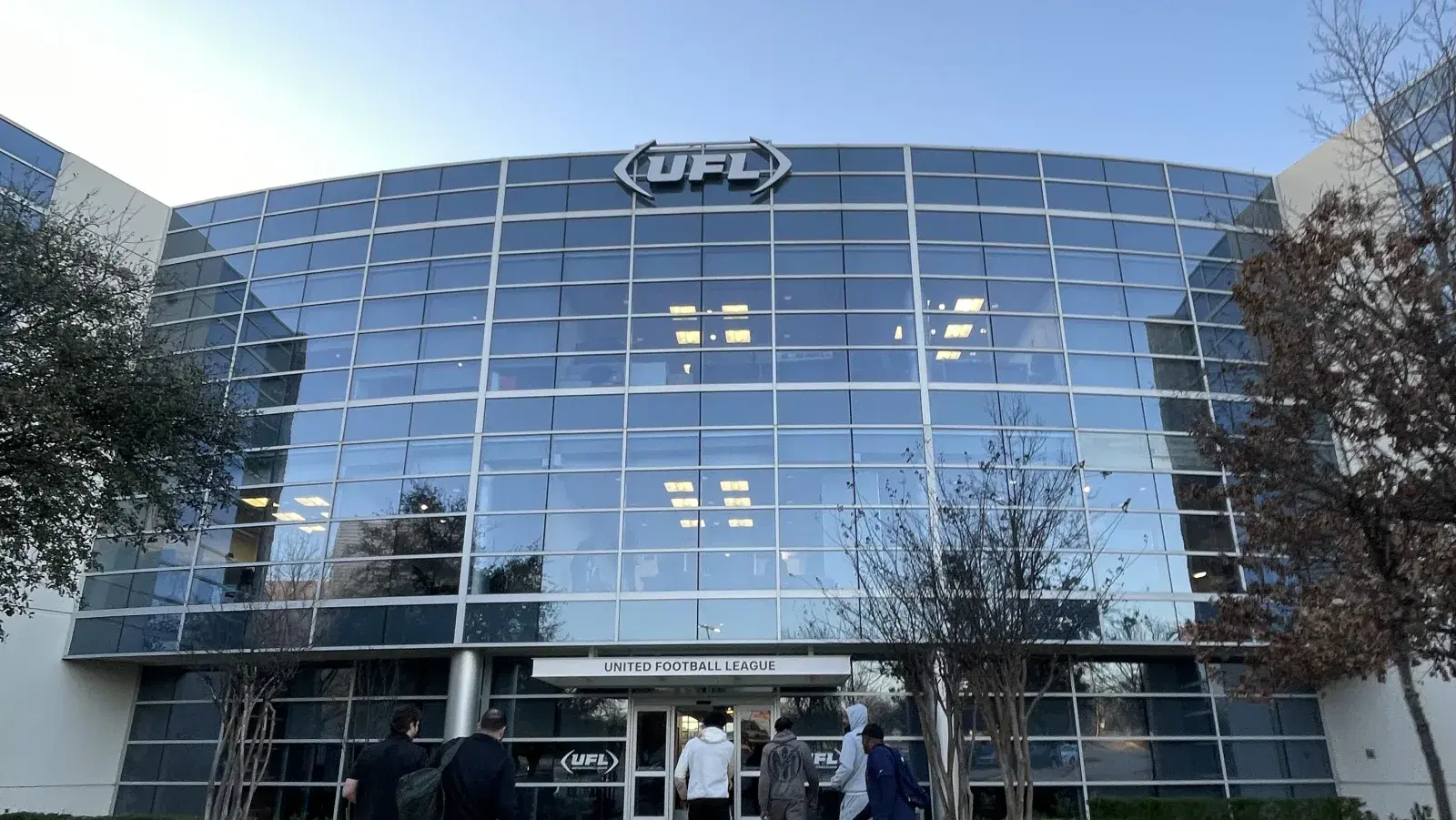
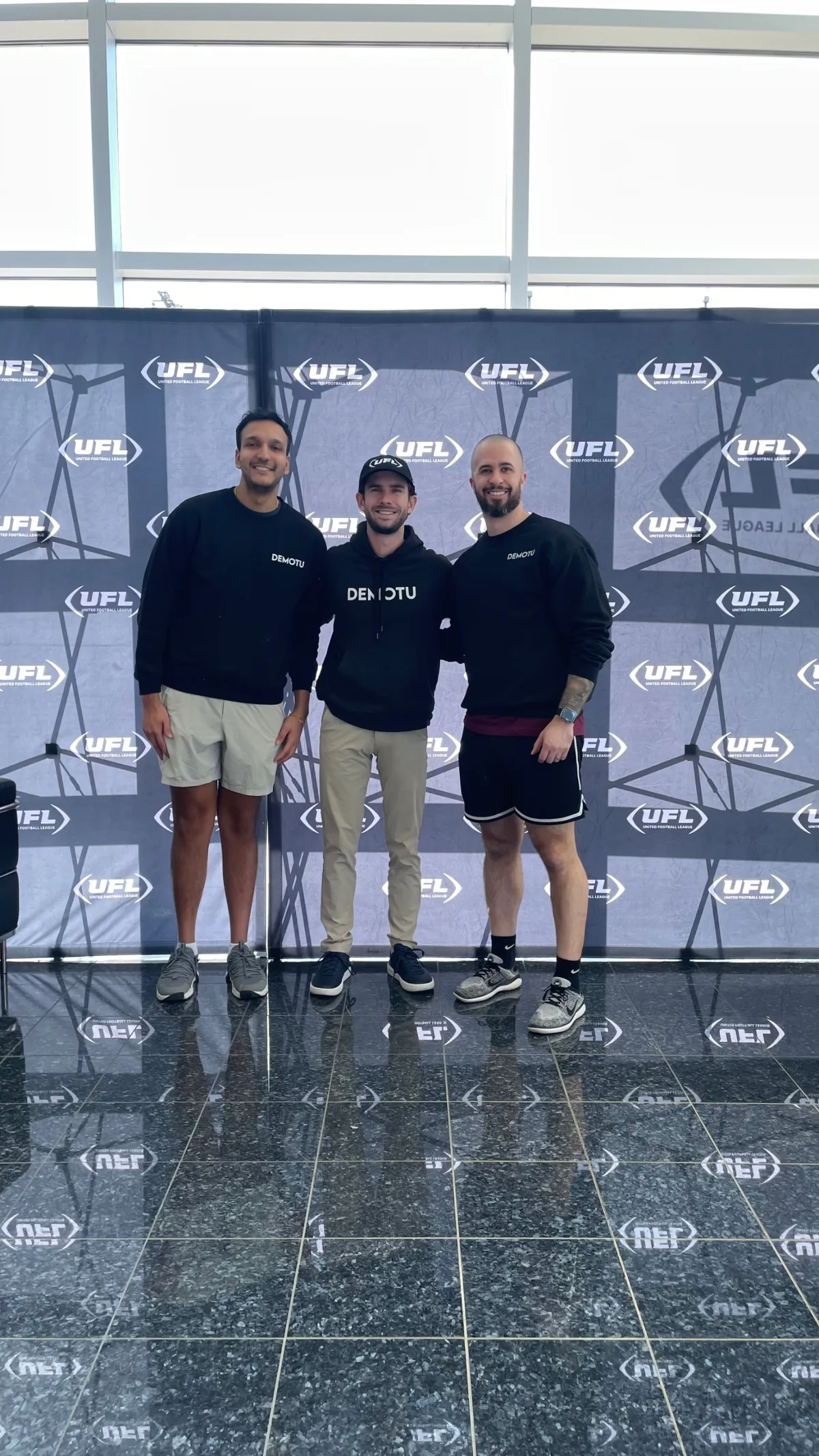
Our team traveled to Arlington, Texas for the first weekend of UFL pre-season training. Over a single day at UFL HQ, we assessed 512 athletes across four movement patterns: overhead squat, overhead press, single-leg RDL, and countermovement jump. The full run took under seven hours, and we never had more than three athletes in assessment at once.
How the day ran
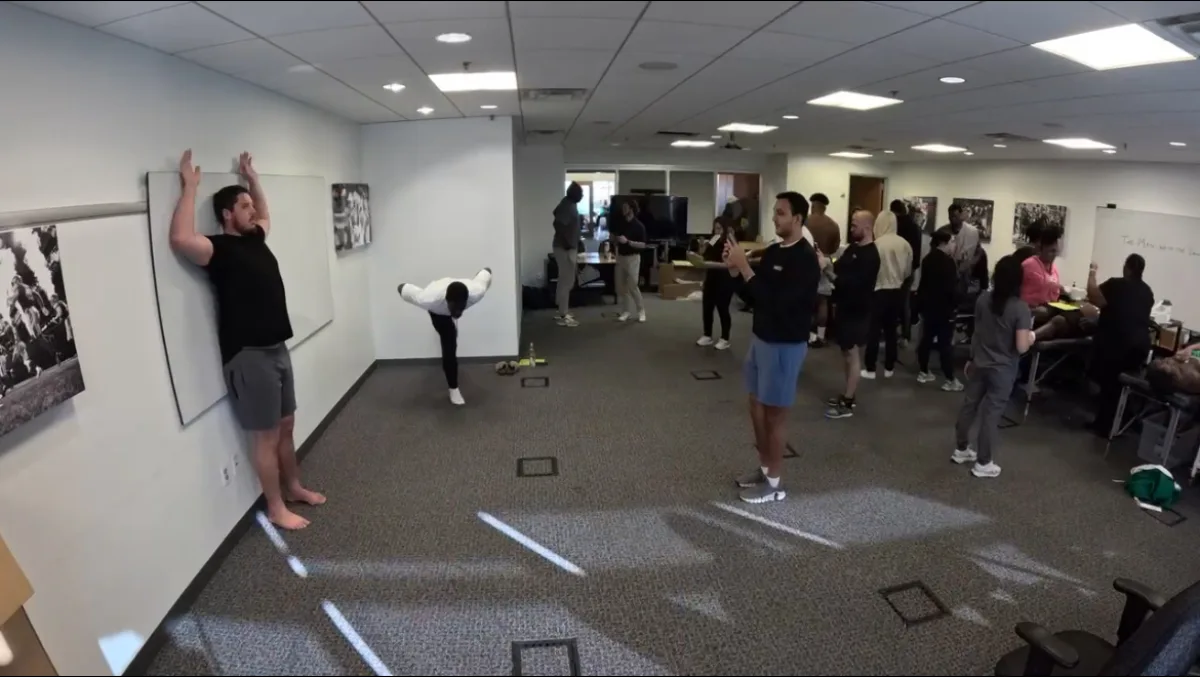
Athletes cycled through the stations while Demotu processed each movement in seconds. The app generated a report per athlete flagging movement limitations, asymmetries, and inefficiencies, with no manual data entry and no subjective scoring. Coaches read results between reps and training stayed on schedule. For most athletes, this was their first look at objective data on their own mobility, stability, and imbalances.
What the four tests showed
Each pattern added a different piece of the movement profile:
- Overhead squat. Mobility restrictions in the ankles, hips, and thoracic spine. Some athletes compensated with excessive forward lean, knee valgus, or limited depth. Many biased toward the hips or the knees to reach depth, depending on which joint had more mobility.
- Overhead press. Shoulder stability and thoracic mobility, which matter for positions demanding upper-body strength and control. Limited scapular movement and side-to-side imbalances pointed to restrictions that affect lifting, throwing mechanics, and durability.
- Single-leg RDL. Balance, stability, and posterior chain engagement. Athletes who struggled to stabilize or drifted into knee valgus were flagged for inefficiencies that carry into change-of-direction mechanics and injury risk.
- Countermovement jump. Lower-body power. Vertical height and landing mechanics gave coaches a read on neuromuscular efficiency and readiness for high-intensity training.
Same-session programming
A traditional screen means a clipboard, a subjective score, and a report that lands days later. Elite performance staff won't slow training for that trade, so screens get cut down or dropped. At UFL HQ the reports came off a phone in real time, and staff had programming inputs before the day ended: mobility work to adjust, strength and conditioning protocols to refine, athletes to flag for follow-up.
The athletes used the data too. Most had never seen their own movement quantified, and reading their report made the case for mobility and stability work better than any coach's speech could.
Screening 512 athletes in a day without disrupting training settled the throughput question for us. Demotu is partnering with the UFL to keep developing performance optimization at the individual level.