
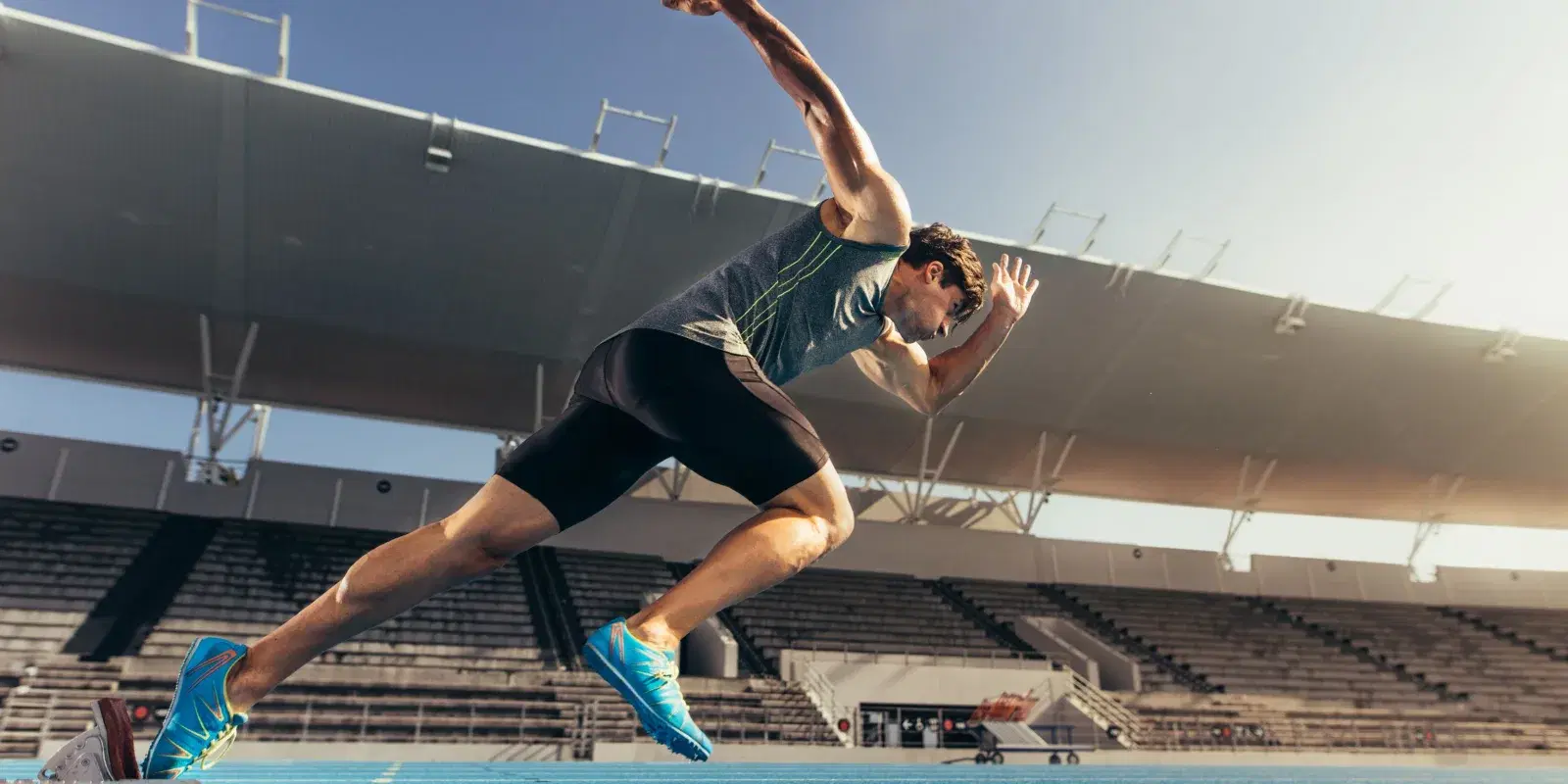
Speed comes from coordination, not raw effort. A sprinter needs a specific set of movement patterns and muscle activations to fire in sequence, and biomechanics separates a good sprinter from a phenomenal one.
Mechanics decide the race
Good mechanics channel force into forward motion with minimal waste, so each stride covers more ground for the same effort. They also protect the athlete. Sprinting loads the body hard, and even force distribution prevents excess strain on any one joint or muscle, cutting the risk of common injuries like hamstring strains. Efficient mechanics delay fatigue too, which lets a sprinter hold top speed longer.

The variables that matter
Sprint technique breaks down into a handful of measurable pieces:
- Stride length versus frequency. Each sprinter has a cadence where step length and turnover balance for maximum ground covered per unit of energy.
- Foot strike. Forefoot, midfoot, and heel striking each carry trade-offs in contact time and force transfer.
- Torso positioning. A forward lean cuts air resistance and sets up hip extension, but the degree of lean has a sweet spot.
- Arm swing. Arms contribute to propulsion. Tight, coordinated swing mechanics add forward drive.
Coaches tune these variables against each other. Overreaching on stride length, for instance, costs frequency and often adds braking force at contact.
The same lens for distance runners
Gait analysis extends the toolkit past the sprint. Three more metrics matter once the distances grow:
- Ground contact time. Shorter contact correlates with more efficient runners.
- Vertical oscillation. Excess bounce is energy lost upward; smooth runners send it forward.
- Pelvic rotation and core stability. Excess rotation through the pelvis breeds inefficiency and overuse injury.
A runner with long ground contact and heavy vertical oscillation needs different work than one with sound rhythm but collapsing knee angles.
Putting mechanics into training
Understanding the variables changes what happens off the track. Coaches build drills that groove specific positions, then back them with strength and conditioning work that supports those positions under fatigue.

Demotu measures stride mechanics, joint angles, and asymmetries from phone video, so you can see which of these variables is limiting an athlete and check whether drill work changes it. Retest after a training block and compare the numbers rather than the eye test.