Book a 1-on-1 consultation with our teamBook a Demo →
Athletic team training
SPORTS TEAMS & PERFORMANCE ORGANIZATIONS

A New Standard for Athlete Performance

Move beyond observation. Operate on data.

The best programs aren't relying on more effort. They're building systems around how athletes actually move.

Demotu gives performance departments a consistent way to assess movement, track progress, and make better decisions across the entire roster.

Powering Performance Organizations Worldwide
UFFLSlamBallGold's GymIowa StatePenn StateMannSJCASU MidsouthPartnerSMWCPartnerPartnerSaint Mary's

3D Movement Analysis Across Your Entire Roster

Observation and experience are essential — but without a consistent system, evaluation can vary across staff and athletes.

Different coaches see different things
Movement assessments vary across staff
Return-to-play decisions become inconsistent
Small issues can go unnoticed until they impact availability

The gap isn't effort. The gap is visibility.

3D MOVEMENT ASSESSMENTS

Understand How Every Athlete Moves

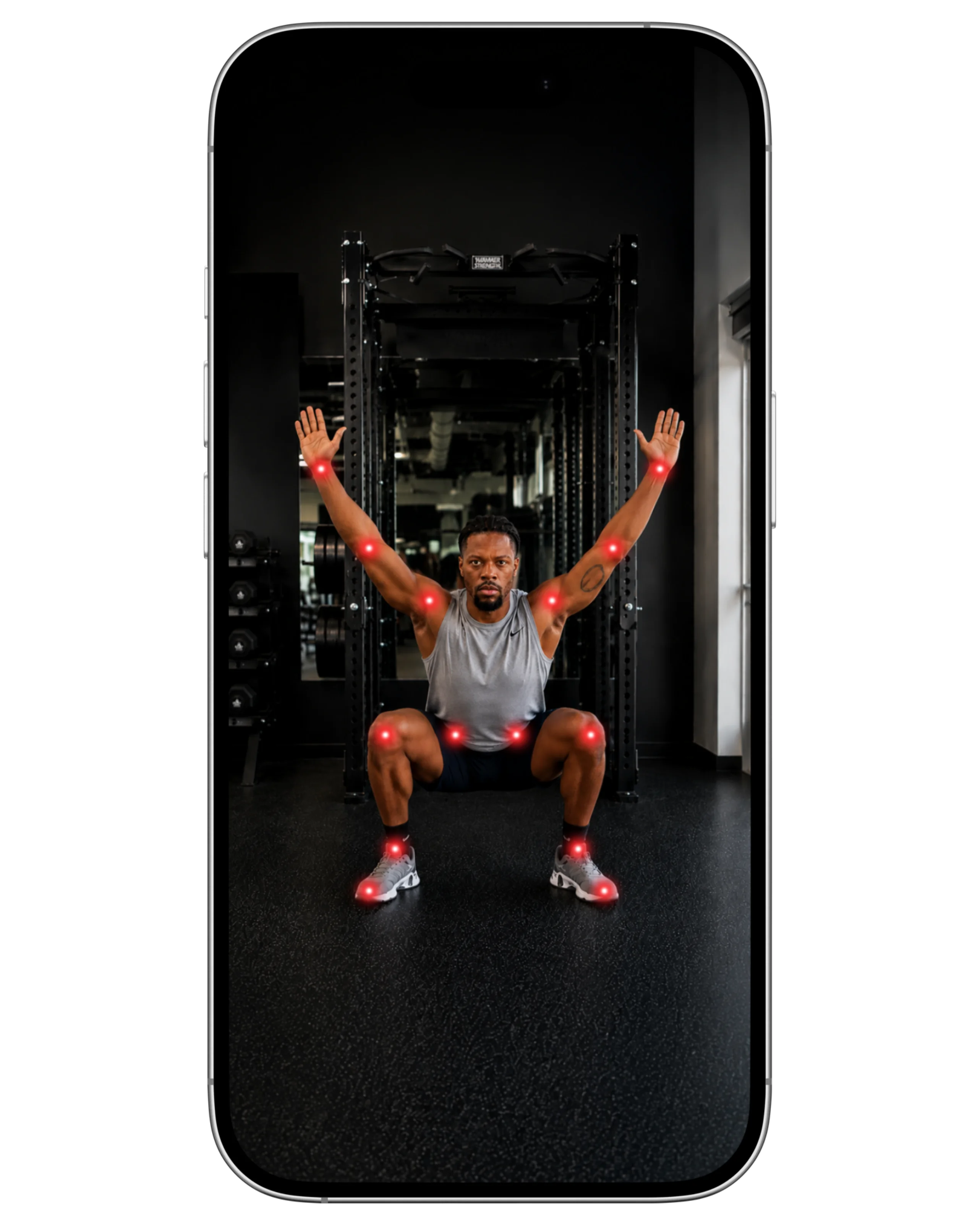
Capture and analyze how every athlete moves with consistent, objective data your entire staff can rely on.

Roster Overview
32 Athletes
Athlete
Aggregate Movement Trend
Score
MJ
Marcus Johnson
WR
87
TW
Trey Williams
RB
82
AC
Aiden Clark
LB
79
JR
Jordan Reeves
View Injury Report
CB
INJURY
91
DS
Derek Simmons
OL
74
IM
Isaiah Moore
S
85
CM
Carlos Mendez
DE
78
JB
Jaylen Brooks
TE
88
RETURN TO PLAY

Make Return-to-Play Decisions With More Confidence

Returning athletes too early — or too late — impacts availability, performance, and risk. Demotu gives your staff a clearer picture of recovery.

Compare against pre-injury baseline
Track progress through each phase
Support decisions with objective data
Reduce re-injury risk
Injury Sustained
JR
Jordan Reeves
CB · # of Assessments: 10
91Score
Functional Movements
Aggregate
100%75%50%25%INJURYJanMarJunJulAugSep
CMJ
100%75%50%25%INJURYJanMarJunJulAugSep
SquatOverhead
100%75%50%25%INJURYJanMarJunJulAugSep
Overall
Overall
Overall
First Movement Assessment Post Injury
Return to Play
JR
Jordan Reeves
Age 20 · Right Knee Injury · Rehab Phase
Recovering
Jordan sustained a right knee injury during training camp. His program focuses on restoring knee stability, rebuilding lower-body strength, and safely progressing back to full team activities using objective movement data at every stage.
Movement AnalysisJun 17, 2025
48Overall
50
Jump
47
Squat
52
RDL
57
Balance
43
Lunge
40
Hinge
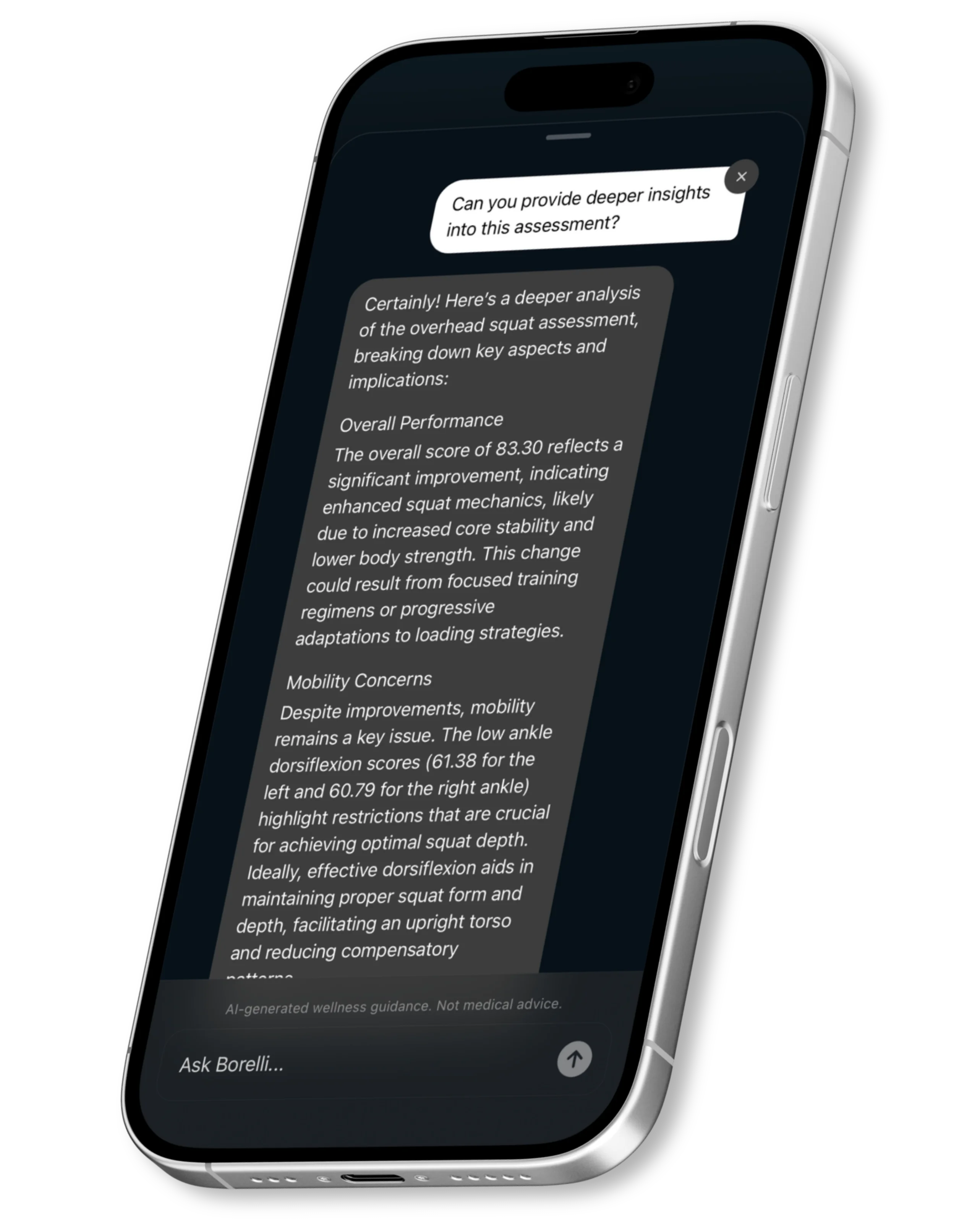
Borelli AI Analysis

Jordan's post-injury movement scan shows significant limitations across lower-body movement patterns, with reduced output in jump (50), squat (47), and hinge (40), indicating compromised force production and restricted loading capacity through the right knee.

Single-leg stability and control are notably impaired, with balance (57) and lunge (43) scores highlighting asymmetry and reduced confidence in unilateral movement. RDL (52) shows partial posterior chain engagement, but overall coordination and force transfer remain limited.

Movement patterns suggest protective compensation, decreased knee flexion tolerance, and an inability to generate or absorb force effectively — particularly in multi-joint and single-leg tasks.

At this stage, Jordan is operating well below baseline and is not ready for high-load or dynamic movement.

Priority focus:
Restore pain-free range of motion
Rebuild quad activation and joint stability
Improve single-leg balance and control
Eliminate compensatory movement patterns
Gradually reintroduce force production under control

Full return to performance will require a structured progression, beginning with foundational rehab and controlled movement before advancing to strength and power development.

Generate 4 Week Block
Program Summary

Knee Stability & Return-to-Play Progression

Restore joint stability, rebuild single-leg strength, and reintroduce force production while maintaining full-body performance. Progress from controlled movement patterns to dynamic, sport-specific loading to prepare for return to play.

Duration: 4 WeeksDays/Week: 4Focus: Rehab + Strength RetentionLevel: Intermediate (Post-Injury)
Week 1REBUILD & CONTROL
Restore range of motion + baseline stability
Focus: Reduce compensation, restore mobility, re-establish neuromuscular control
Day 1: Lower Body – Stability Foundation
Low-load, controlled movement emphasizing joint positioning and balance. Slow tempos (3-1-2) to reinforce control.
Primary Work
Assisted Split Squat – 3x8/side
Heel Elevated Goblet Squat – 3x10
Single-Leg RDL (BW/light DB) – 3x8/side
Stability / Control
Terminal Knee Extensions (banded) – 3x15
Single-Leg Balance Hold – 3x30s
Step-Up (low box) – 3x8/side
Core
Deadbug – 3x10
Side Plank – 3x20s
Day 2: Upper Body – Strength Maintenance
Standard push/pull work — maintain strength
Day 3: Lower Body – Controlled Range
Leg Press – 3x12 · Reverse Lunge – 3x8/side · Ham Curl – 3x12 · Glute Bridge – 3x12
Day 4: Upper + Core Stability
Core emphasis with upper body accessory work
Week 2STABILITY → STRENGTH
Increase load + improve unilateral control
Focus: Introduce moderate loading while maintaining control and symmetry
Key Additions
Bulgarian Split Squat – 3x8 · Single-Leg Press – 3x10 · Lateral Step-Down – 3x8 · Sled Push (light) – 4x15m
Week 3FORCE REINTRODUCTION
Build strength + begin dynamic loading
Focus: Restore force production and controlled deceleration
Primary Work
Front Squat – 3x6-8 · Walking Lunges – 3x10/side · Trap Bar Deadlift – 3x5
Dynamic Intro
Low-Level Plyometrics (double-leg pogo) – 3x10 · Controlled Deceleration Drills – 4x5
Week 4RETURN TO PERFORMANCE
Explosive + sport-specific readiness
Focus: Reintroduce speed, power, and reactive movement
Primary Work
Back Squat – 4x5 · Split Squat Jumps – 3x5 · Trap Bar Jumps – 3x5
Speed & Agility
Acceleration Sprints (70-85%) – 6 reps · Change of Direction Drills
Return-to-Play Prep
Position-specific movement · Reactive drills (mirror / read & react)
Outcome

By the end of 4 weeks, Jordan should demonstrate:

Restored knee stability and control
Improved single-leg strength and symmetry
Full range of motion under load
Reintroduced explosive capacity
Confidence in sport-specific movement
The Intelligence Behind Every Analysis

Meet Borelli AI

Borelli AI combines movement analysis, athlete data, and trainer inputs to understand the full context of every client. It transforms biomechanical insights into personalized training programs designed to unlock performance.

+
Body Composition
+
Movement Assessments
+
Client Goals
+
Trainer Philosophy
+
Performance Metrics
+
Workout History
Borelli AI
GENERATES IN SECONDS
Jordan Ramirez
Jordan Ramirez
Age 20 • Improve acceleration & reduce hamstring tightness
Completed
Movement Analysis
75Overall
82
Jump
68
Squat
74
RDL
65
Balance
71
Lunge
78
Hinge
Borelli AI Analysis

Jordan's movement scan shows strong explosive potential with above-average jump (82) and hinge mechanics (78), indicating solid posterior chain capacity and power production. However, moderate limitations in squat (68), balance (65), and lunge stability (71) suggest reduced single-leg control and force transfer during multi-joint lower body movements.

click below
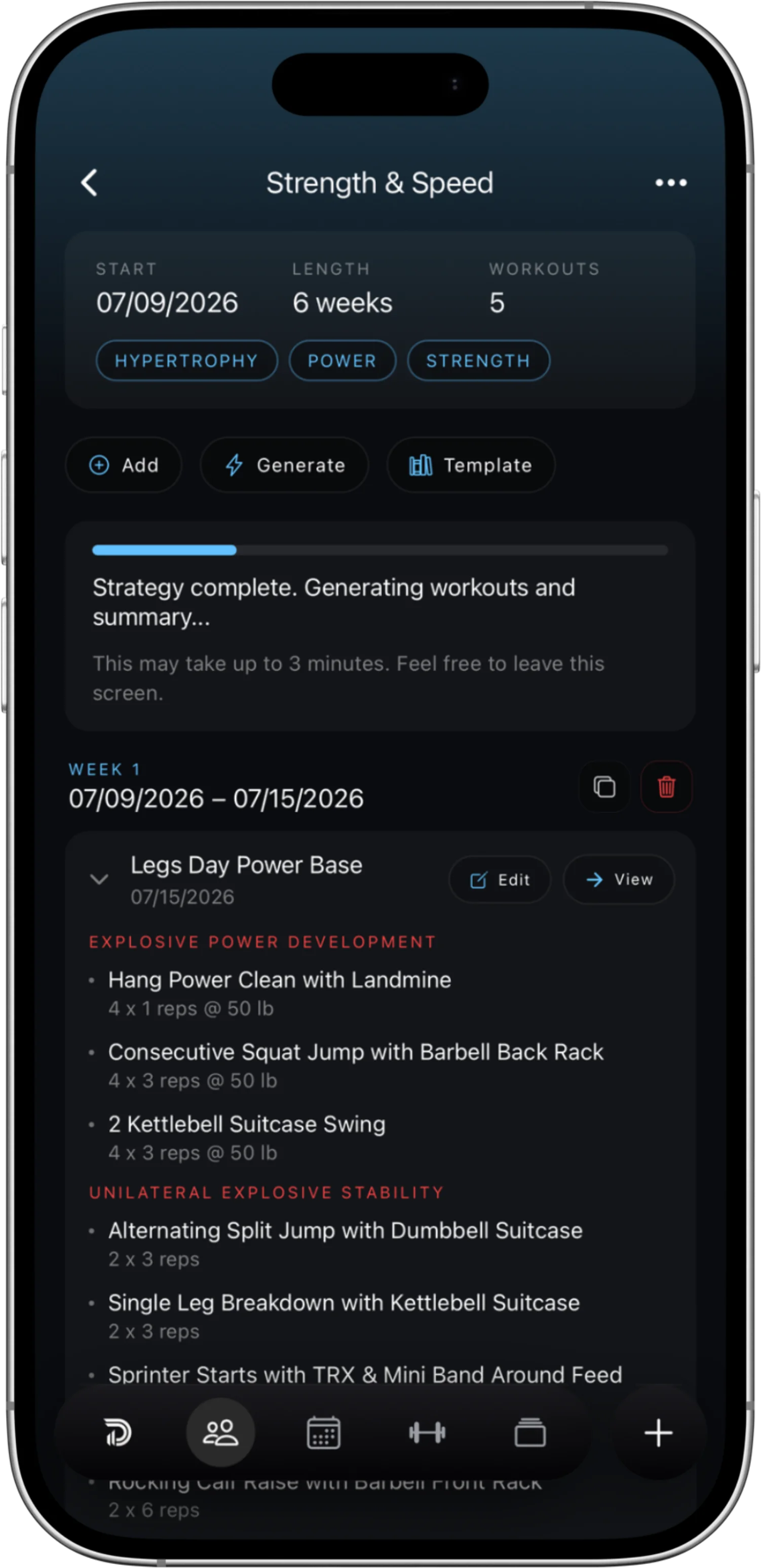
Program Summary
Strength & Stability for Sprint Performance

Build total-body strength and lower-body stability to maximize force production, improve acceleration mechanics, and translate power into faster sprint speed.

See full summary →
Duration:4 Weeks
Days/Week:3
Focus:Strength & Balance
Level:Intermediate
Week 1Accumulation
05/29/2026 – 06/04/2026
+
Week 2Progressive Volume
06/05/2026 – 06/11/2026
+
Week 3Intensity
06/12/2026 – 06/18/2026
+
Week 4Peak & Transfer
06/19/2026 – 06/25/2026
+
3D MOVEMENT ASSESSMENT

Measure Every Movement That Matters

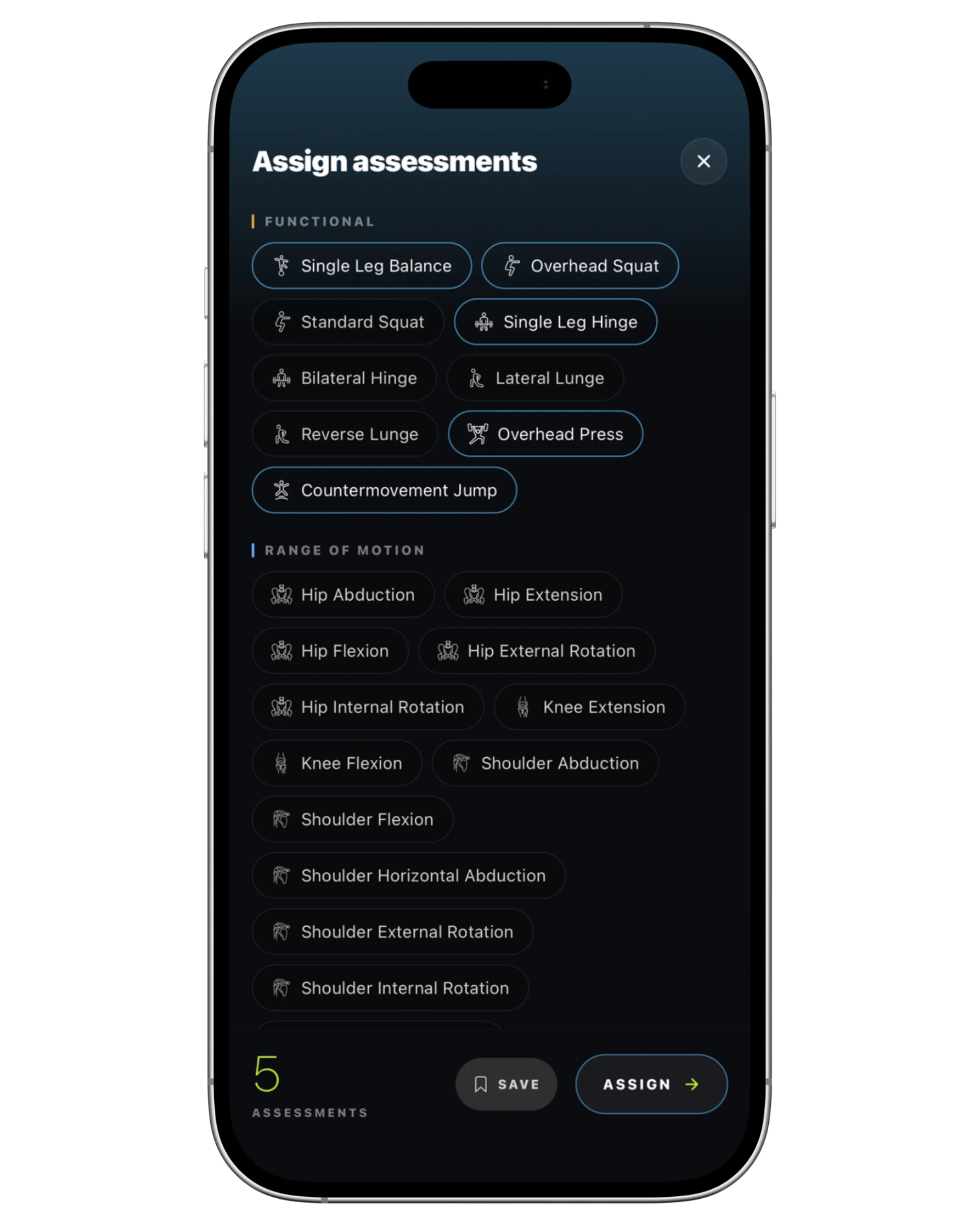
Analyze the movement patterns that directly impact performance, efficiency, and durability — so you can clearly see what's holding athletes back.

Power & Explosiveness

Assess jump mechanics, force production, and landing control.

Learn More

Mobility & Stability

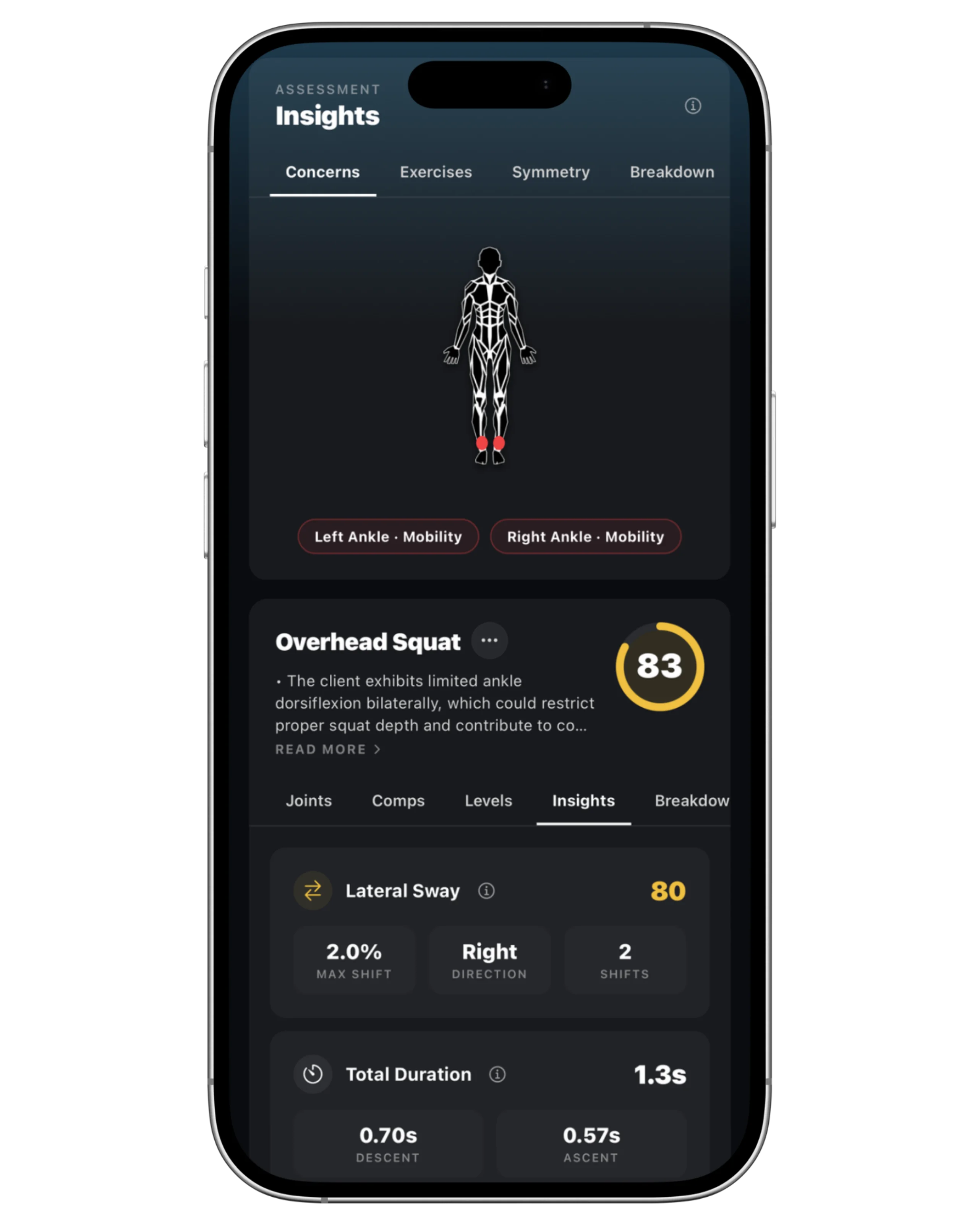
Analyze overhead squat patterns to uncover mobility restrictions.

Learn More

Balance & Control

Evaluate single-leg stability and core control.

Learn More

Multi-Planar Movement

Analyze movement across multiple planes using lateral and reverse lunges.

Learn More

Posterior Chain

Assess hip hinge patterns and posterior chain activation.

Learn More

Upper Body Function

Evaluate overhead pressing mechanics and shoulder mobility.

Learn More
SlamBall athletes with Demotu
CASE STUDY

The Power of Data-Driven Biomechanics in Athletic Performance and Injury Prevention

“Demotu's ability to capture precise 3D keypoints eliminated subjective biases, enabling accurate tracking of joint angles, compensations, and asymmetries. Whether evaluating an entire roster or focusing on individual athletes, the platform seamlessly accommodated both team-wide and personalized approaches, making it an indispensable tool in optimizing athlete performance.”

Joe Resendez
Joe Resendez
Head of Player Health & Performance, SlamBall
73%
Reduction in Soft Tissue Injuries
4.2x
Faster Return-to-Play Decisions
100+
Athletes Assessed Per Season
WHAT DEMOTU UNLOCKS

Better Decisions Across Every Athlete

Bring clarity to how your staff evaluates movement, manages recovery, and develops athletes — with a system built for consistency across the entire roster.

Drive Athlete Buy-In

When athletes can see how they move, they understand it faster. Corrections stick. Engagement increases without adding more coaching time.

Make Better Return-to-Play Decisions

Track athletes against their own baseline and monitor progress through each phase of rehab. Make decisions based on movement — not timelines.

Reduce Preventable Injuries

Identify limitations and compensations early, before they become missed time or recurring issues.

Operate at Scale

Assess entire rosters efficiently while still delivering individualized insight to every athlete.

“I have utilized Demotu over the past two seasons as an integral part of our athlete evaluation and performance process. During that time, we incorporated the technology into our entrance physicals, screening more than 500 athletes to efficiently identify movement limitations and potential risk factors. Throughout the season, Demotu has also been a valuable tool for reassessing movement patterns, guiding corrective exercise strategies, and informing elements of our return-to-play decision-making. The platform provides objective, actionable data that enhances both performance and medical decision-making, and the vision behind Demotu is clearly reflected in the practicality and effectiveness of the system.”

UFL
Dr. Steve Trocchio, PT, DPT
UFL, Director of Player Rehabilitation
Demotu Training Platform
PLATFORM

One System for Your Entire Performance Operation

Most tools solve one piece of the problem. Demotu connects the full workflow.

3D Biomechanical Analysis

Create a consistent standard for how movement is assessed across all athletes and staff.

Return-to-Play Intelligence

Monitor recovery against baseline and track readiness with objective data.

Performance Monitoring

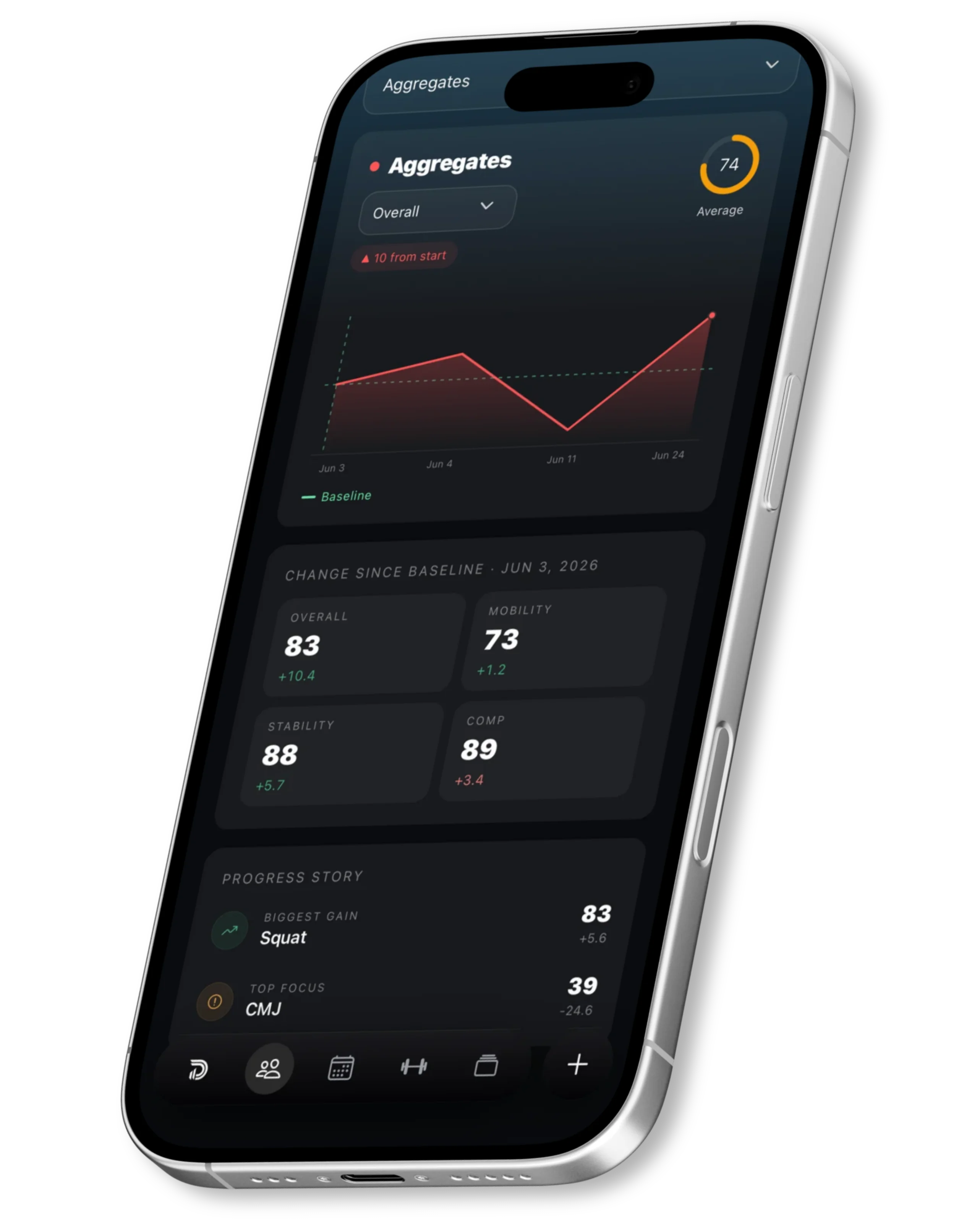
Understand trends across your roster and evaluate what’s actually improving.

Roster & Staff Management

Organize athletes, streamline workflows, and keep your entire staff aligned.

SYSTEM COMPATIBILITY

Integrations & Data Connectivity

Connect Demotu with your existing tools and workflows to unify athlete data across systems.

Centralized Performance System

Use Demotu as your primary platform to manage movement, recovery, and performance in one place.

Cross-Department Alignment

Ensure coaches, performance staff, and medical teams operate from the same athlete insights.

Scalable Deployment

Start with one team and expand across your organization with consistent processes.

We love it. We just did our position players scanning for the 2nd time yesterday and they all improved! The team is off to our best start in program history at 9-1. If you move better, you play better.”

ASU Mid-South
Jason Middleton
Head Baseball Coach & Assistant AD
YOUTH DEVELOPMENT

Build Better Athletes From Day One

The best programs don't wait until problems show up. They build movement quality early.

Demotu helps coaches identify limitations, teach efficient movement patterns, and give athletes clear, visual feedback they can actually understand.

RedlineTestimonial

“Demotu has been an incredible addition to the value we deliver to our athletes and the support we provide our coaches. Their tools and their commitment to continually pushing the limits of the fitness and sports performance industry are truly unmatched. Backed by top notch customer support, they have proven to be an outstanding partner, and we are proud to work with them.”

Redline
Phil PadillaNational Director of Athletic Development

“We have incorporated Demotu into our assessment process at Ground Force Strength and Conditioning to improve how we identify muscular imbalances and early indicators of injury risk.

By using Demotu's movement analysis technology during our athlete screenings, we are able to objectively measure asymmetries in lower-body strength, and stability that are often missed with traditional functional assessments.

This data allows us to detect subtle imbalances between limbs, understand how athletes generate and absorb force, and identify patterns that may increase the likelihood of soft-tissue injury.

Integrating Demotu into our movement lab assessments has strengthened our ability to combine objective data with coaching insight, giving athletes and parents a clearer picture of how the body is functioning and where targeted intervention can keep players healthy and progressing.”

Ground Force
James Walsh
Owner, Ground Force Strength & Conditioning Training
FAQ

Frequently Asked Questions

How does Demotu fit into our existing performance workflow?

Demotu is designed to fit into how your department already operates. You can integrate it alongside your existing tools or use it as a central system to standardize how movement is assessed, tracked, and acted on.

Most organizations start by adding movement analysis into their current process, then expand into a more unified system over time.

Do we need to replace our current systems?

No. Demotu can complement your existing stack by adding a layer of movement intelligence.

For organizations looking to simplify, it can also replace fragmented tools by centralizing assessment, recovery tracking, and athlete management into one system.

How is this used across different staff roles?

Demotu is built for collaboration across strength & conditioning staff, athletic trainers / medical staff, and sport coaches.

Everyone works from the same data, improving alignment and decision-making across departments.

How long does it take to assess an athlete?

Most movement assessments are completed in under 60 seconds using just a phone.

This allows your staff to assess entire teams quickly without disrupting training or practice schedules.

Can this scale across an entire roster?

Yes. Demotu is built for organizations managing dozens or hundreds of athletes.

You can assess, track, and monitor your entire roster while still delivering individualized insight for each athlete.

How does Demotu improve return-to-play decisions?

Demotu allows you to compare an athlete’s movement to their own baseline and track progress throughout rehab.

This gives your staff objective data to support decisions — rather than relying solely on timelines or subjective evaluation.

Does this replace traditional movement screens?

It doesn’t replace them — it standardizes and enhances them.

Demotu provides objective, repeatable movement data so every staff member evaluates athletes consistently.

How does this help reduce injuries?

By identifying movement limitations, asymmetries, and compensations early, your staff can address issues before they lead to missed time.

It shifts your approach from reactive to proactive.

What kind of data does Demotu provide?

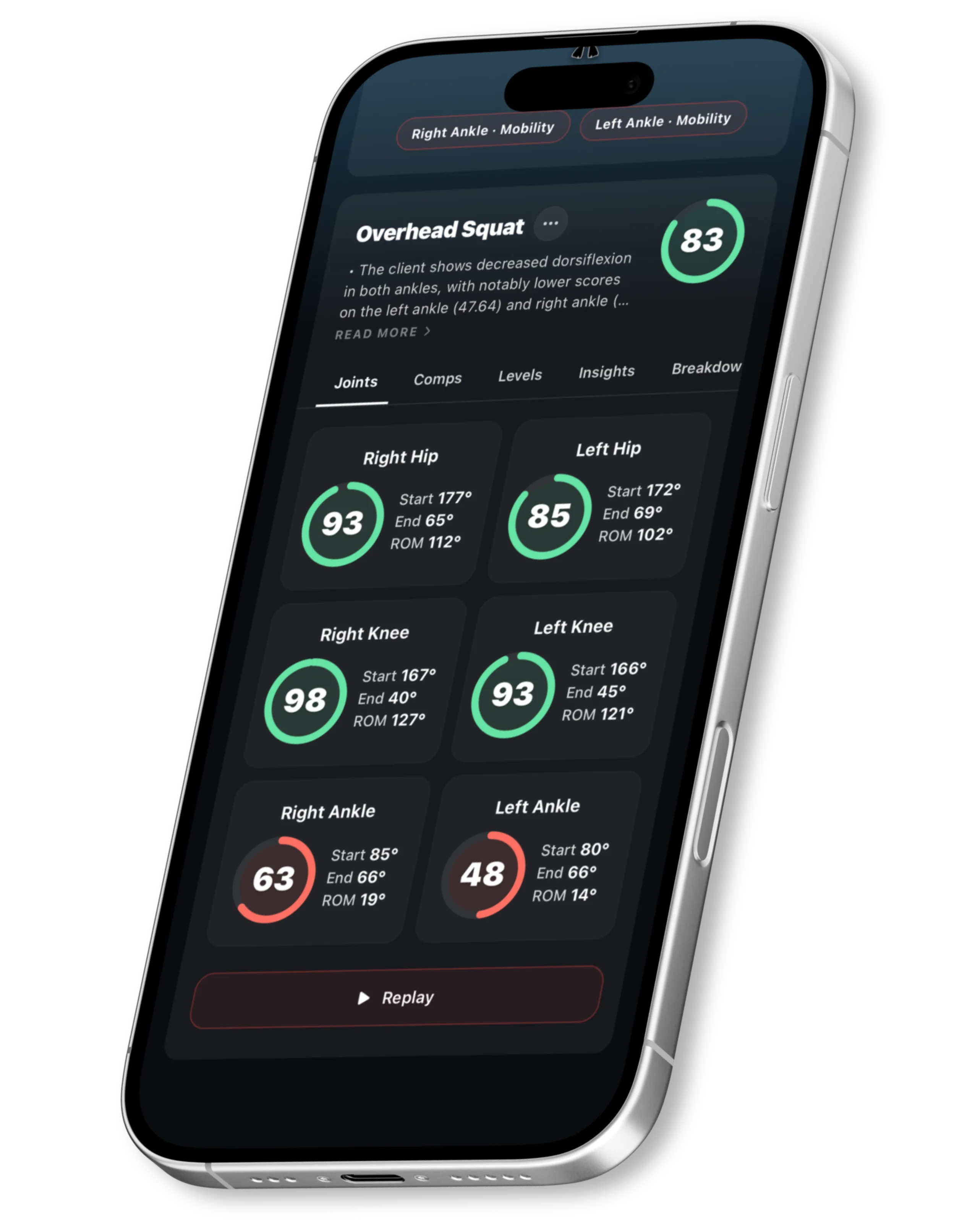
Demotu delivers joint-by-joint biomechanical insights, movement scores, and clear indicators of limitations and asymmetries.

The data is designed to be actionable — so your staff knows what to address and how.

How easy is it for staff to adopt?

Assessments are done with a phone, and the platform is designed to fit into existing workflows without adding complexity.

Most teams are able to start using it immediately with minimal onboarding.

Can we start with one team or department?

Yes. Many organizations begin with a single team, position group, or rehab group, then expand across the full program.

What makes Demotu different from other performance tools?

Most tools track what athletes do. Demotu analyzes how they move.

By focusing on movement quality and biomechanics, it provides a deeper level of insight that directly impacts performance, injury risk, and return-to-play decisions.

Is this more for performance or medical staff?

Both. Demotu sits between performance and sports medicine — giving both groups a shared view of movement, recovery, and readiness.

How does this impact athlete performance?

Better movement leads to better force production, efficiency, and durability.

By identifying and addressing limitations early, your staff can improve how athletes move — which translates to better performance over time.

ROI & Impact
How does Demotu justify its cost?

In most programs, the cost of a single missed game from a key athlete can exceed the cost of implementing Demotu.

Demotu improves availability, reduces preventable issues, and supports better decision-making — all of which impact performance and program outcomes.

What is the cost of not having a system like this?

Without a standardized system: movement evaluation varies across staff, injuries are often identified too late, return-to-play decisions become inconsistent, and staff time is spent managing tools instead of coaching.

These gaps compound over a season — impacting availability, performance, and efficiency.

How does Demotu impact athlete availability?

Demotu helps identify issues early and provides better visibility during recovery.

This leads to more athletes staying healthy and returning to play at the right time. More availability = more consistent performance.

Can this reduce injury-related costs?

While no system eliminates injuries entirely, Demotu helps reduce preventable injuries by improving how movement is assessed and monitored.

Even small reductions in missed time can create significant impact across a season.

How does this improve return-to-play efficiency?

Demotu helps avoid returning athletes too early (risk of re-injury) and holding athletes out longer than necessary.

Both scenarios carry real cost. Objective data helps your staff make better decisions.

How does this impact staff efficiency?

Demotu reduces time spent switching between systems, repeating assessments, and managing fragmented data.

This allows your staff to focus more on coaching and athlete development.

Does this help scale our program without adding staff?

Yes. Demotu enables your staff to manage more athletes with greater consistency, without increasing workload proportionally.

How does this compare to hiring additional staff?

Hiring adds capacity, but not consistency.

Demotu improves how your current staff operates — standardizing evaluation and decision-making across your program.

How does this impact recruiting and program reputation?

Programs that consistently keep athletes healthy and performing at a high level build stronger reputations.

Athlete availability and development are key drivers of how your program is perceived.

Where does Demotu create the most value?

Demotu creates the most value at the intersection of injury prevention, return-to-play, athlete development, and staff alignment.

This is where most programs experience inefficiencies today.

What does success look like with Demotu?

More consistent evaluation across staff. Better alignment between performance and medical teams. Earlier identification of risk. More confident return-to-play decisions. Improved athlete availability and development.

Build a System Your Staff Can Rely On

Every program wants better outcomes. The difference is whether those outcomes are repeatable.

Demotu helps you create a performance system your staff can trust — one that improves decision-making, reduces risk, and scales across your entire roster.

Because at this level, consistency wins.